
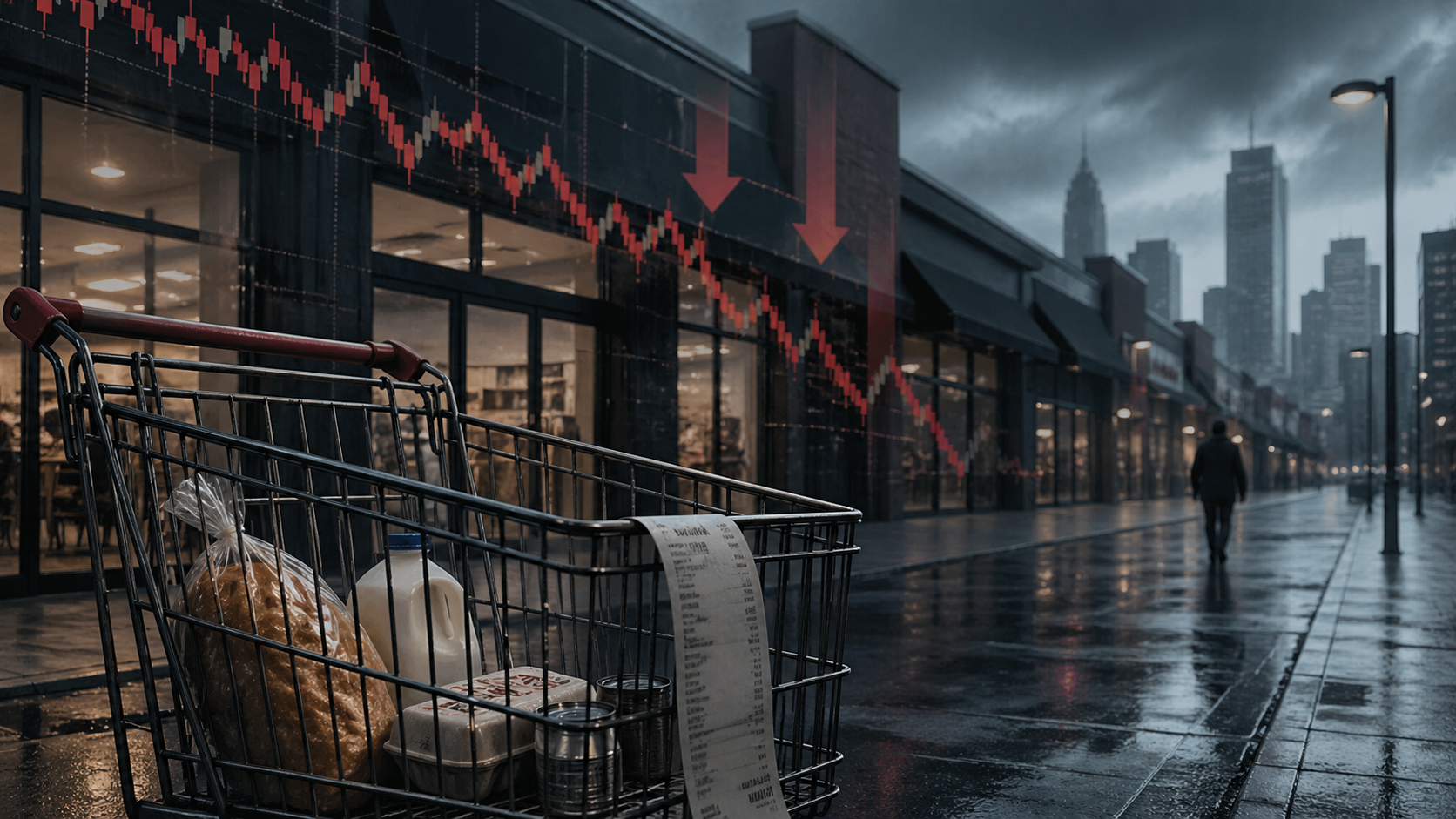
The drop in consumption and economic slowdown is no longer just a feeling on the street. In 2026, several major institutions are already pointing to a weaker global growth environment, higher uncertainty and renewed pressure on households. The IMF projects global growth to slow to 3.1% in 2026 and 3.2% in 2027, while the OECD expects global GDP growth of 2.9% in 2026 and 3.0% in 2027. The World Bank, in its January 2026 Global Economic Prospects, described the global economy as settling into a relatively low-growth path, with global growth expected to hold around 2.7% in 2025–26.
From my perspective as an expert, this fits with what is already visible in the real economy: more cautious consumers, households reviewing every expense, and companies starting to feel weaker demand. A drop in consumption rarely appears overnight. It usually begins with small decisions: postponing purchases, looking harder for discounts, switching to cheaper brands, cutting non-essential spending or avoiding new debt.
The euro area offers a useful example of this fragility. Eurostat reported that retail trade volume fell by 0.2% month-on-month in the euro area and 0.3% in the EU in February 2026, although retail sales were still 1.7% higher year-on-year. That mix matters: it does not show a collapse, but it does show a short-term cooling in consumer activity.
That is why the key question is not simply whether consumption is falling. The real question is: what is that fall telling us about the actual health of the economy?
The Current Context: A Global Economy Losing Speed in 2026
The fall in consumption needs to be understood within a broader global context. In 2026, the world economy is not necessarily in recession, but it is showing clear signs of slower momentum. The IMF points to weaker global activity after a period of trade barriers and elevated uncertainty, with the Middle East conflict adding a major new test for the global outlook.
The OECD’s March 2026 interim outlook also highlights a similar picture: global growth is expected to remain modest, with energy price pressures and geopolitical uncertainty weighing on demand, even as technology-related investment provides some support.
This matters because consumption depends heavily on expectations. When households believe the economy may become more difficult, they often spend less even before their income actually falls. And when companies detect weaker demand, they usually become more cautious: they reduce stock, delay hiring, cut costs or postpone investment.
In my reading, this is the part that should not be ignored. A drop in consumption does not always start as an open crisis. Very often, it begins as a collection of small behavioural changes: fewer impulse purchases, more price comparison, less financing, more precautionary saving and more careful business planning. Once those behaviours become widespread, economic slowdown stops being just a forecast and starts showing up in daily life.
What a Drop in Consumption Really Means
A drop in consumption happens when households, consumers or businesses reduce their spending on goods and services. It can be seen in supermarkets, restaurants, retail stores, tourism, leisure, housing, cars, technology and professional services.
Not every decline in consumption has the same level of seriousness. Sometimes it is just a temporary correction after a period of strong spending. But when the decline lasts, spreads across sectors and appears alongside weaker purchasing power, job uncertainty or tighter credit, the situation becomes more serious.
At that point, we are no longer talking about consumers simply becoming more selective. We are talking about an economy showing signs of fatigue.
Consumption as an Engine of the Economy
Private consumption is one of the main engines of economic activity. When households spend, companies generate revenue. When companies generate revenue, they pay wages, hire workers, invest, buy supplies and support wider economic activity.
So when consumption weakens, the effect spreads quickly. Retailers feel it first. Suppliers feel it next. Then companies begin adjusting production, staffing, investment and expectations.
In simple terms: when people buy less, the economy moves less.
This is exactly what I am seeing as an expert: an economic slowdown that first becomes visible through consumer behaviour. We do not always need to wait for GDP data to confirm the problem. Often, the earliest thermometer is found in the street, in the average shopping basket, in retail footfall, in business confidence and in household caution.
Why Buying Less Is Not Always a Choice
There is a simplistic idea that if consumption falls, people must be choosing to save more. Sometimes that is true, but not always. In many cases, a drop in consumption is not a comfortable decision. It is a forced adjustment.
When prices rise, wages lose purchasing power or people worry about job security, households cut back. First, they reduce non-essential spending: leisure, restaurants, clothing, technology and travel. Then they adjust everyday consumption. In more difficult scenarios, they even reduce essential spending or rely on credit to cover basic needs.
That is not healthy saving. That is financial defence.
So a fall in consumption may reflect a deterioration in purchasing capacity. Consumers do not stop spending because they no longer want to consume. They stop because income no longer stretches as far, or because they prefer to hold cash in case the future gets worse.
The Difference Between a Pause and a Warning Signal
A temporary decline in consumption does not automatically mean a crisis is coming. Seasonal effects, calendar changes, post-holiday adjustments or the end of strong promotional periods can all affect spending.
The warning signal appears when several factors coincide:
- Consumption falls for several months.
- Real purchasing power weakens.
- Retail sales lose momentum.
- Credit becomes more expensive or harder to access.
- Consumer confidence deteriorates.
- Companies reduce investment or hiring.
- Household debt stress increases.
When these factors combine, a drop in consumption stops being a minor data point and becomes a serious warning of economic slowdown.
Why Falling Consumption Can Anticipate an Economic Slowdown
The link between consumption and economic activity is direct. If households spend less, businesses sell less. If businesses sell less, they revise expectations downward. And if expectations worsen, the economy loses speed.
An economic slowdown does not always begin with a formal recession. Often, it starts with gradual cooling: weaker sales, lower investment, tighter credit, softer confidence and more cautious hiring.
In my case, what I see is that consumption is often one of the first visible signs. Before GDP data confirms a slowdown, consumers have usually already changed their behaviour.
Less Spending, Fewer Sales and Weaker Activity
When household spending falls, companies face three immediate problems.
First, they bring in less revenue. Second, they may lose margin if they need to offer discounts to keep sales moving. Third, they become more cautious because they do not know whether the decline is temporary or structural.
This behaviour then spreads through the economy. A store that sells less buys less inventory. A supplier receiving fewer orders reduces production. A company facing weaker demand delays investment. And a business unsure about the future avoids hiring.
That is how a slowdown cycle forms: consumption falls, revenue falls, investment slows and employment becomes more fragile.
The Link Between Wages, Employment and Domestic Demand
Consumption depends heavily on disposable income. If real wages lose ground to inflation, consumers lose purchasing power. If job uncertainty rises, the natural reaction is to spend less.
This directly affects domestic demand. Households become more selective, prioritise essentials and delay big purchases. At the same time, companies detect lower demand and become more cautious.
The problem is that this caution, multiplied across millions of households and thousands of businesses, can deepen the slowdown.
The key point is simple: an economy does not cool only because money is tight. It also cools because confidence weakens.
When a Slowdown Can Turn Into a Recession
An economic slowdown means the economy is growing more slowly, or losing momentum. A recession implies a clearer and more sustained contraction in economic activity.
Falling consumption can become the bridge between slowdown and recession when it persists and combines with other negative indicators:
- lower investment;
- Rising unemployment;
- Tighter credit;
- Weaker real income;
- Lower production;
- Falling exports or industrial activity;
- Negative business expectations.
Put simply: an economy can absorb a temporary drop in consumption. What is harder to absorb is a persistent, widespread decline combined with weaker employment and purchasing power.
The Main Causes of Falling Consumption
A decline in consumption rarely has one single cause. It is usually the result of several pressures building up at the same time.
Sometimes the trigger is inflation. Sometimes it is debt. In other cases, labour market uncertainty matters more. And in economies where credit plays a major role, high interest rates can quickly cool big-ticket purchases such as housing, cars or durable goods.
Loss of Purchasing Power
The loss of purchasing power is one of the most important causes of falling consumption. If income rises more slowly than prices, consumers can buy less even if their nominal salary has increased.
This is easy to see in everyday life. A household may earn the same amount, or even slightly more, but if food, rent, transport, energy and services rise faster, there is less money left for discretionary spending.
In this scenario, consumers do not necessarily stop buying everything. Instead, they change the structure of their spending:
- They buy fewer units;
- They look for promotions;
- They switch brands;
- They reduce outings;
- They postpone big purchases;
- They cut non-essential services;
- They rely more on financing or credit.
As an expert, this is one of the signs I find most concerning: when consumers stop choosing freely and start consuming defensively.
Inflation and the Cost of Living
Inflation does not only affect the wallet. It also affects expectations. When prices move quickly, people lose reference points. They no longer know whether something is expensive, cheap or worth buying now.
That uncertainty creates two possible behaviours. At times, consumers bring forward purchases to avoid future price increases. But when income fails to keep up, inflation eventually has the opposite effect: it reduces consumption.
The rising cost of living also changes priorities. Essentials take up a larger share of income. Rent, food, transport, healthcare, education and utilities leave less space for leisure, technology, home improvements, travel or savings.
As a result, even sectors that do not seem directly linked to inflation can end up being affected.
Household Debt
Debt can support consumption for a while, but not forever. When families begin financing everyday expenses, using credit cards to get through the month or refinancing existing debt, apparent consumption can hide financial fragility.
The problem appears when credit becomes more expensive, income does not keep up or late payments rise. Then households do not simply consume less. They must also devote a growing share of income to servicing debt.
This further reduces available spending and can deepen the economic slowdown.
Job Uncertainty and Lower Confidence
Confidence is invisible, but it matters enormously. If someone fears losing their job, they are likely to cut spending even if their income has not yet changed. If a company expects weaker sales, it may delay hiring even if it is still profitable.
The economy also runs on expectations. When consumers and businesses believe the future may be worse, they become more cautious. And that caution can turn fear into reality.
That is why falling consumption should not be analysed only through sales data. Consumer confidence, business expectations, employment conditions and the wider economic mood also matter.
How Economic Slowdown Affects Households and Businesses
Economic slowdown does not affect everyone equally. Some households have savings and can adapt. Others live close to the limit, so any increase in prices or fall in income hits immediately.
The same is true for companies. Businesses with cash reserves, diversified revenue and strong management can cope better. Small firms, local retailers and businesses with narrow margins usually feel the pain first.
Households Cut Essential and Non-Essential Spending
The first adjustment usually happens in non-essential spending. Families reduce leisure, restaurants, subscriptions, clothing, technology and weekend trips. Then they review regular purchases: groceries, brands, transport, services and daily habits.
In a more advanced phase, the adjustment reaches sensitive areas such as healthcare, education, food quality or home maintenance. When that happens, the fall in consumption stops being only an economic issue and becomes a social problem.
Let’s be clear: an economy where households consume less because they are choosing to save may simply be rebalancing. But an economy where households consume less because they cannot make ends meet is deteriorating.
Businesses Face Lower Sales, Lower Margins and More Caution
For businesses, falling consumption creates pressure from several sides. Sales decline, price competition increases, costs become harder to pass on and margins can shrink.
This forces difficult decisions:
- Reducing stock;
- Renegotiating with suppliers;
- Freezing hiring;
- Adjusting opening hours;
- Launching promotions;
- Reviewing prices;
- Delaying investment;
- Cutting operating costs.
The delicate part is that many of these decisions are rational for each individual company, but collectively they can reinforce the slowdown. If everyone adjusts at the same time, the economy loses momentum.
Sectors Most Sensitive to a Consumption Shock
Not all sectors feel falling consumption with the same intensity. The most exposed are usually those linked to discretionary spending or financed purchases.
The most vulnerable sectors often include:
- Retail;
- Restaurants;
- Tourism;
- Leisure;
- Fashion;
- Technology;
- Furniture and appliances;
- Cars;
- Construction and home renovation;
- Personal services.
Essential sectors tend to be more resilient, but they are not immune. In supermarkets, for example, total basic spending may continue, but consumers may switch to cheaper brands, buy more discounted products or reduce the real value of their basket.
The New Variable: Technology, Employment and Artificial Intelligence
In recent years, a new variable has entered the economic debate: the impact of technology and artificial intelligence on employment, income and consumption.
This should not be treated with alarmism. Technology can improve productivity, create new industries and make processes more efficient. But it can also generate tension if it displaces jobs, concentrates gains or reduces wage income in certain sectors.
Automation and Pressure on Skilled Jobs
For a long time, automation was mainly associated with repetitive or low-skilled work. Artificial intelligence changes that discussion because it also affects administrative, creative, analytical, legal, financial, commercial and customer service tasks.
If this transition is not well managed, it can put pressure on skilled employment, reduce income for certain professional profiles and increase job uncertainty.
And we return to the same point: if people feel their job or income is at risk, they spend less.
Why Productivity Does Not Always Become Consumption
An economy can become more productive and still fail to improve the living standards of most people. If productivity rises but wages do not follow, consumption can remain weak.
This is one of the major debates of the current economic cycle. Technology can increase output with fewer resources, but if income becomes too concentrated or employment becomes more unstable, domestic demand can suffer.
In other words: it is not enough for the economy to produce more. It also matters who receives the income and whether that income returns to the economy through consumption and investment.
The Risk of an Economy That Grows Without Reaching the Household
A paradox can emerge: strong figures in certain sectors, powerful technology companies, optimistic financial markets and, at the same time, weaker consumers.
That disconnect between the financial economy and the real economy is dangerous. People do not live from stock indices. They live from wages, rent, grocery bills and their ability to plan ahead.
From my point of view, this is one of the keys to understanding the current slowdown: aggregate indicators are useful, but they are not enough. We need to ask whether growth is reaching the household. If it is not, consumption will eventually reveal that disconnect.
Signals to Watch When the Economy Is Cooling
To interpret a fall in consumption, one indicator is not enough. We need to observe several signals together to understand whether we are looking at a temporary pause or a deeper slowdown.
Retail Sales and Private Consumption
Retail sales are a direct signal of consumer behaviour. If they fall persistently, especially in real terms, they show that households are buying less.
Private consumption is also essential because it captures household spending on goods and services. A sustained contraction suggests weakness in domestic demand.
But the headline number is not enough. We also need to ask:
- Which sectors are falling most;
- Whether volume is falling or only prices are changing;
- Whether consumers are switching to cheaper products;
- Whether promotions are increasing;
- Whether the average basket is shrinking;
- Whether big-ticket purchases are being delayed.
The February 2026 Eurostat data is a good example of why nuance matters. Retail trade declined month-on-month in both the euro area and the EU, but still showed annual growth of 1.7%. That suggests cooling, not collapse.
Credit, Debt and Late Payments
Credit can accelerate or slow the economy. When credit is accessible, it supports consumption, housing, cars, investment and business working capital. When it becomes expensive or restricted, many decisions are postponed.
Late payments are also an important signal. If more households or companies begin to fall behind, financial stress is rising.
An economy can look stable while credit keeps spending alive. But if that credit becomes unaffordable or stops flowing, consumption can fall sharply.
Employment, Real Wages and Consumer Confidence
Employment is probably one of the most important indicators. If the labour market weakens, consumption suffers. But even with stable employment, if real wages fall, the effect is also negative.
Consumer confidence acts as a psychological thermometer. When people believe their situation will worsen, they reduce spending and increase precautionary saving.
The economy is deeply human in this sense. It does not move only through data. It also moves through perception, fear, expectations and daily decisions.
Business Investment and Expectations
Business investment shows how companies see the future. If they invest, hire and expand operations, they usually expect demand. If they freeze projects, reduce stock or delay hiring, they are reading a weaker scenario.
That is why an economic slowdown is better confirmed when consumption falls and companies become more cautious at the same time.
What Households, Companies and Investors Can Do During a Consumption Slowdown
A fall in consumption cannot be solved by one individual decision, but it can be managed better. Households, companies and investors can take prudent action without falling into panic.
The key is realism: do not ignore the signals, but do not overreact either.
Prudent Decisions for Households
For households, the main goal should be to protect liquidity, reduce financial vulnerability and prioritise spending.
Reasonable decisions include:
- Reviewing fixed expenses;
- Reducing expensive debt;
- Avoiding unnecessary financing;
- Comparing prices;
- Building an emergency fund where possible;
- Prioritising health, food, housing and education;
- Postponing large purchases if they threaten stability;
- Avoiding financial decisions driven by fear.
This does not mean stopping consumption completely. It means consuming more strategically.
Strategies for Companies Facing Weaker Demand
Companies should read falling consumption as a signal to adjust strategy, not just to cut costs.
Useful measures include:
- Reviewing prices and margins;
- Identifying which products remain resilient;
- Segmenting customers more carefully;
- Using promotions without destroying profitability;
- Controlling inventory;
- Protecting cash flow;
- Strengthening digital channels;
- Retaining existing customers;
- Diversifying revenue sources;
- Measuring profitability by product or service.
In a slowdown, selling more is not always the same as earning more. Sometimes the priority is to sell better, protect margins and maintain long-term customer relationships.
How to Read the Scenario Without Alarmism
A drop in consumption should be taken seriously, but it does not automatically mean an unavoidable crisis is coming. Economies move in cycles: expansion, cooling, adjustment and recovery.
The important thing is to separate temporary signals from persistent trends.
In my analysis, the most common mistake is looking only at the data that confirms what we already want to believe. Optimists minimise the decline. Pessimists see an immediate recession. A better reading looks at the full picture: consumption, wages, employment, credit, investment, inflation and confidence.
Conclusion: Falling Consumption Is Not Just a Data Point, It Is a Warning
The drop in consumption and economic slowdown are deeply connected. When households spend less, economic activity loses strength. When companies sell less, they adjust expectations. And when consumers and businesses become cautious at the same time, the economy enters a more delicate phase.
A fall in consumption does not always mean recession. But it is a warning, especially when it comes together with weaker purchasing power, persistent inflation, debt stress, labour uncertainty and lower confidence.
In 2026, the main global institutions are pointing to a weaker growth environment, while recent European retail data shows a mixed but cautious picture: short-term weakness, with some annual resilience.
My expert reading is clear: when consumers begin to cut spending in a sustained way, it is worth paying attention. Not because we should fall into alarmism, but because consumption often reveals the real economy before many official indicators do.
The economy does not cool only in charts. It cools in the shop’s cash register, in the supermarket basket, in the decision to delay a purchase, in the company that stops hiring and in the household that starts checking every expense twice.
That is why understanding falling consumption is not just about understanding an economic indicator. It is about understanding the real pulse of households, companies and markets.
Frequently Asked Questions About Falling Consumption and Economic Slowdown
What does a drop in consumption mean?
A drop in consumption means that households, consumers or businesses reduce spending on goods and services. It can affect essentials, leisure, technology, tourism, housing, cars or services. When it lasts over time, it may indicate weaker purchasing power, lower confidence or economic cooling.
Does falling consumption always mean recession?
No. A temporary decline in consumption does not always mean recession. It can be caused by seasonal or temporary factors. However, if the decline is persistent and comes with weaker employment, lower real wages, falling investment and tighter credit, it can anticipate a recession.
What is the difference between an economic slowdown and a recession?
An economic slowdown happens when the economy grows more slowly or loses momentum. A recession involves a deeper and more sustained contraction in activity. Falling consumption can appear in both phases, but it becomes more worrying when it lasts and affects several sectors.
Which sectors are affected first when consumption falls?
The most sensitive sectors are usually retail, restaurants, tourism, leisure, fashion, technology, cars, furniture, appliances and non-essential services. Basic goods tend to be more resilient, although consumers may switch to cheaper brands or buy more discounted products.
How can consumption recover?
Consumption usually recovers when real incomes improve, inflation falls, confidence rises, employment stabilises and credit becomes more accessible. Business investment, positive expectations and household financial stability also play an important role.
Why is consumer confidence so important?
Because many spending decisions depend on expectations. Someone may still have income today, but if they fear losing their job or believe the economy will worsen, they are likely to spend less. Confidence affects large purchases, saving, borrowing and household planning.
How does falling consumption affect companies?
It reduces sales, margins and predictability. Companies may need to adjust prices, launch promotions, reduce stock, control costs or delay investment. If the fall lasts, it can also affect hiring and expansion plans.
Which indicators should be watched to detect economic slowdown?
Important indicators include retail sales, private consumption, real wages, employment, inflation, credit, late payments, consumer confidence, business investment and GDP. One single indicator is not enough; the key is whether several indicators point in the same direction.