
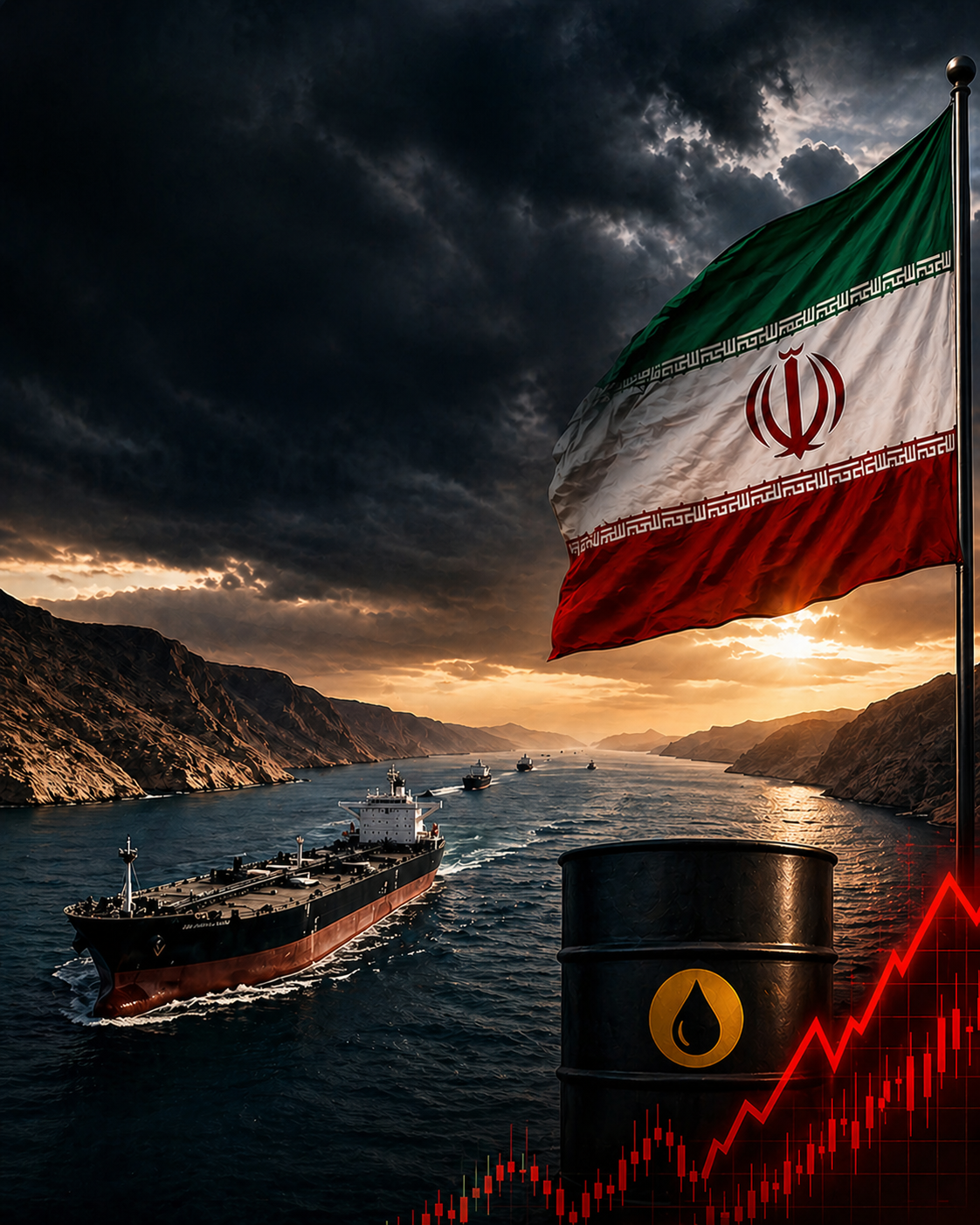
Oil markets, inflation expectations and financial stability move higher as geopolitical tensions intensify in late April
Geopolitical tensions in the Middle East returned to the center of global financial markets this week after reports suggested that Iran was refusing to negotiate over its nuclear program or the strategic control of the Strait of Hormuz while military tensions in the region continued escalating.
At the time of publication on April 26, markets were already operating under elevated uncertainty following several days of growing instability across the region. Oil traders, bond markets and currency investors were all reacting to the possibility that diplomatic channels between Tehran and Western powers could remain frozen for an extended period.
From my perspective, the most important aspect of this situation is not simply the political confrontation itself.
It is the macroeconomic chain reaction that global markets immediately begin to price whenever the Strait of Hormuz enters the geopolitical conversation.
Oil prices, inflation expectations, bond yields, central bank policy and global risk sentiment all become interconnected extremely quickly.
And importantly, this was happening at a particularly fragile moment for the world economy in late April 2026.
Inflation was still proving persistent across several major economies, central banks remained restrictive, sovereign debt markets were becoming more sensitive to higher yields and growth momentum had already started slowing in parts of Europe and Asia.
That combination made any potential energy shock especially dangerous.
Why the Strait of Hormuz Matters So Much
The Strait of Hormuz remains one of the most strategically important chokepoints in the global economy.
Roughly 20% of global oil supply passes through this narrow maritime corridor, alongside a substantial share of global liquefied natural gas exports.
That means any disruption physical, political or even psychological can immediately affect global energy pricing.
The importance of the strait is not purely logistical. It is also psychological.
Markets view Hormuz as a real-time indicator of geopolitical risk. Even the perception that shipping flows could eventually be disrupted is often enough to trigger immediate volatility in crude oil markets long before any actual supply interruption occurs.
Historically, periods of instability in the Persian Gulf have repeatedly generated aggressive moves in oil prices because investors understand how concentrated global energy flows remain.
From a macroeconomic perspective, the Strait of Hormuz functions almost like a pressure valve for the global economy.
When tensions rise there, inflation expectations often rise globally.
Why the Strait of Hormuz Matters
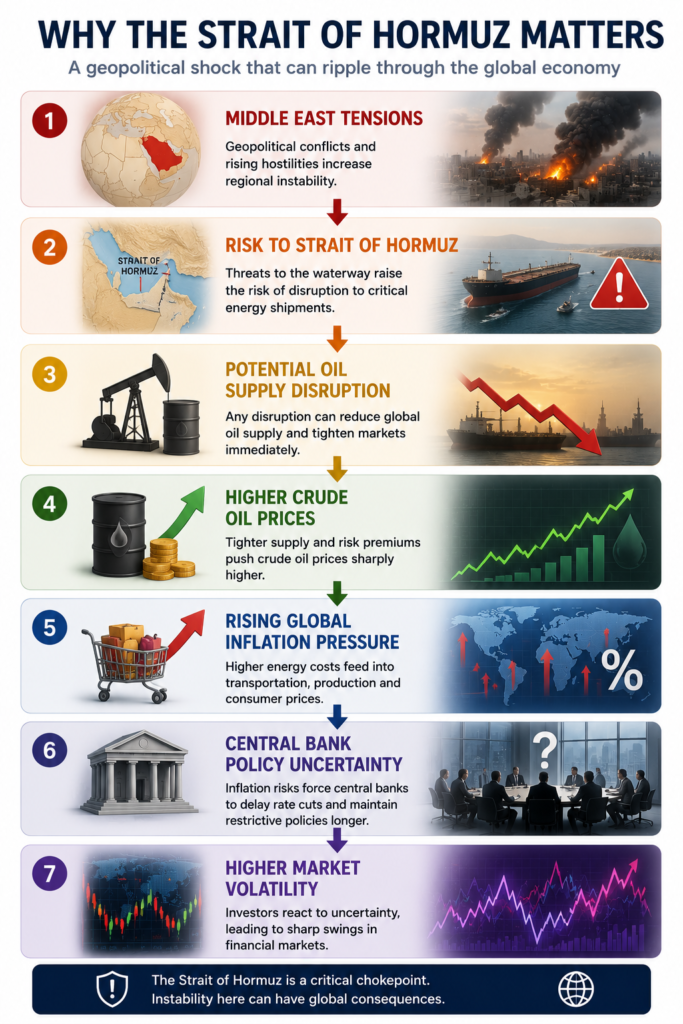
The Strait of Hormuz remains one of the most sensitive geopolitical transmission channels in global markets.
Oil Markets Were Already Reacting
By April 26, oil markets had already begun pricing additional geopolitical risk premiums. Crude prices moved higher as traders assessed the possibility that tensions between Iran, regional actors and Western powers could continue intensifying over the coming weeks. Importantly, oil markets rarely wait for confirmed disruptions before reacting.
Very often, they move based on expectations. If traders believe the probability of future supply interruptions is increasing, crude prices can rise sharply even without immediate physical shortages.
This is why geopolitical headlines from the Persian Gulf can move financial markets so aggressively. From my perspective, this psychological component is one of the most underestimated aspects of commodity markets.
The market does not simply react to what is happening now. It reacts to what investors fear could happen next.
That creates a feedback loop: higher geopolitical tension increases oil prices, rising oil prices increase inflation expectations, and higher inflation expectations affect bond yields, currencies and monetary policy expectations worldwide.
Potential Market Reactions to Higher Oil Prices
| Asset / Sector | Potential Reaction |
|---|---|
| Crude oil | Higher prices and volatility |
| Airlines | Margin pressure from fuel costs |
| Energy producers | Stronger revenues |
| Gold | Safe-haven demand increases |
| Bond markets | Higher inflation expectations |
| Emerging markets | Currency pressure |
| Central banks | Delayed rate cuts |
| Equities | Increased volatility |
Oil shocks tend to spread rapidly across multiple asset classes and sectors.
Inflation Risks Were Becoming More Serious
One of the biggest macroeconomic concerns in late April 2026 was the possibility that rising oil prices could reignite inflation pressures globally.
This mattered enormously because inflation had not fully returned to central bank targets yet.
Higher energy prices quickly affect:
- Transportation.
- Logistics.
- Industrial production.
- Manufacturing costs.
- Consumer prices.
These second-round effects can spread throughout the broader economy relatively quickly.
From my perspective, this was what made the April 26 situation particularly delicate. Central banks were already facing a difficult environment: inflation remained elevated while growth momentum was gradually weakening.
A sustained rise in oil prices could make that balance even more unstable.
Historically, energy-driven inflation shocks are especially problematic because they reduce economic growth while simultaneously increasing price pressures. That creates the risk of a stagflationary environment. And stagflation tends to be one of the most difficult scenarios for both policymakers and investors because traditional economic tools become less effective.
Cutting interest rates too early risks reigniting inflation. Maintaining restrictive policy risks worsening the slowdown.
How Oil Shocks Spread Through the Economy
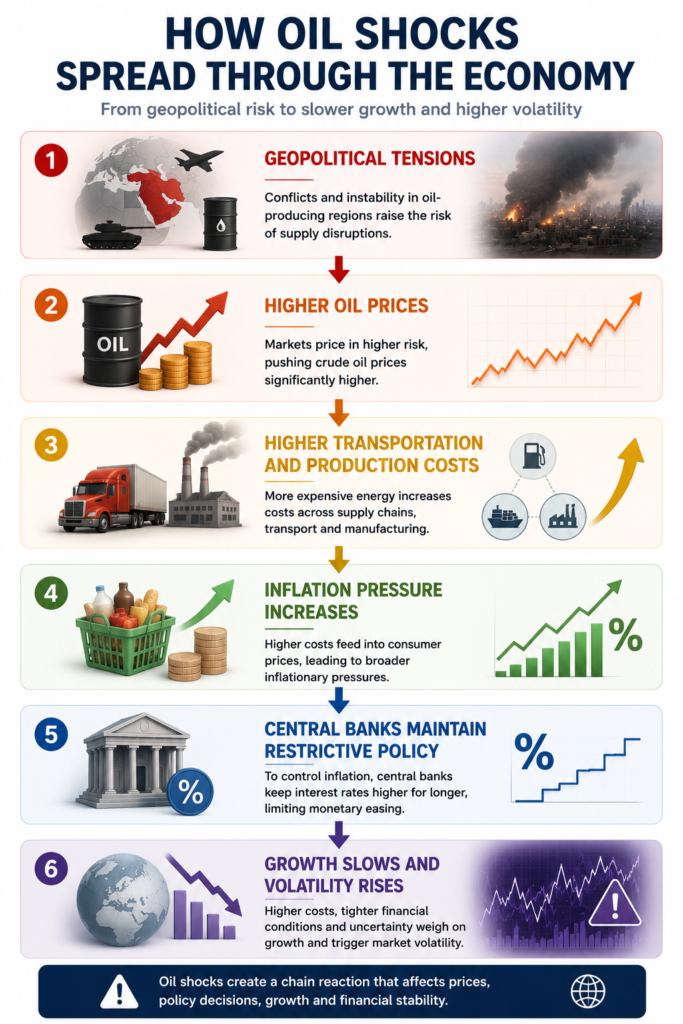
Energy shocks can rapidly spread from commodity markets into inflation, growth and monetary policy.
Financial Markets Were Repricing Geopolitical Risk
Another important shift visible around April 26 was the way financial markets were beginning to treat geopolitical instability. For years, many investors viewed geopolitical events as temporary shocks capable of generating short-term volatility but limited long-term macroeconomic consequences.
That perception has gradually started changing.
The combination of:
- Wars.
- Trade fragmentation.
- Energy insecurity.
- Supply-chain disruptions.
- Strategic competition.
This changes how investors allocate capital.
Markets begin rotating toward:
- Energy producers.
- Defense companies.
- Commodities.
- Safe-haven assets.
- Infrastructure.
- Strategic resources.
While becoming more cautious toward sectors highly exposed to transportation costs, consumer weakness and leveraged financing conditions.
This is one reason why geopolitical headlines now have much stronger macroeconomic implications than they did during earlier periods of globalization and ultra-low inflation.
Currency Markets and Safe-Haven Flows
Currency markets also reacted strongly as geopolitical uncertainty intensified. Historically, periods of geopolitical stress tend to strengthen assets perceived as safe havens, including:
- The U.S. dollar.
- Gold.
- The Swiss franc.
- U.S. Treasury bonds.
At the same time, emerging-market currencies often weaken, especially in economies heavily dependent on imported energy or external financing. This creates tighter global financial conditions.
A stronger dollar increases refinancing pressure for countries and corporations carrying dollar-denominated debt, while higher energy prices weaken trade balances across many importing economies. From a macro perspective, this is why regional geopolitical conflicts can rapidly evolve into global financial events.
Potential Winners and Losers From Rising Oil Prices
| Potential Beneficiaries | Potentially Vulnerable Sectors |
|---|---|
| Oil producers | Airlines |
| Energy infrastructure | Transportation |
| Defense companies | Consumer goods |
| Commodity exporters | Manufacturing |
| Gold and safe havens | Emerging market importers |
Geopolitical energy shocks often create major sectoral divergences across financial markets.
Bond Markets Were Becoming Increasingly Fragile
One of the most important transmission channels remained the bond market. As oil prices and inflation expectations moved higher, sovereign bond yields also faced upward pressure because investors demanded greater compensation for inflation risk. This was especially important because the global economy was already carrying historically elevated debt levels in April 2026.
Higher yields increase refinancing costs for governments and corporations while simultaneously tightening financial conditions.
That creates additional pressure on:
- Debt sustainability.
- Fiscal balances.
- Investment activity.
- Corporate margins.
- Economic growth.
From my perspective, this is one of the reasons why markets became increasingly nervous about geopolitical instability in late April.
The global economy was already fragile before energy prices started reacting to Middle East tensions.
Geopolitical Risk and Financial Markets
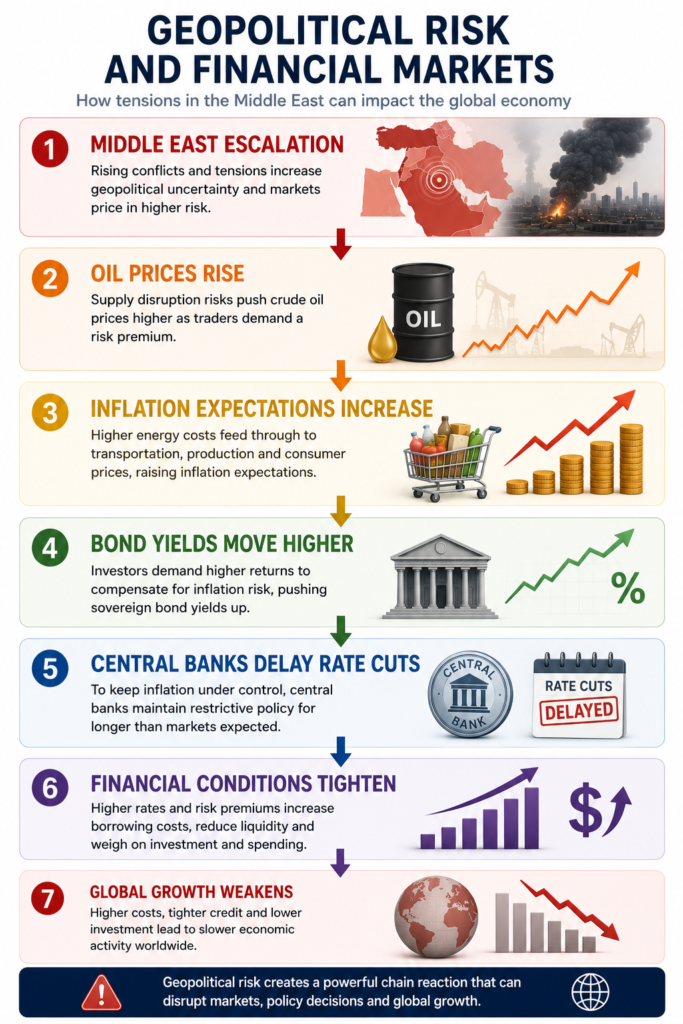
Geopolitical instability increasingly feeds directly into inflation, rates and financial conditions.
Markets Were Watching Every Headline
By April 26, global markets had become extremely headline-sensitive. Any official confirmation from Tehran, Washington or Gulf states had the potential to trigger immediate reactions across:
- Oil markets.
- Equities.
- Currencies.
- Bonds.
- Commodities.
This created a highly reactive market environment where even small geopolitical developments could move billions of dollars in capital flows within hours. And importantly, uncertainty itself became part of the problem.
When investors cannot confidently estimate future geopolitical outcomes, markets tend to demand larger risk premiums across multiple asset classes. That naturally increases volatility.
Conclusion: Geopolitics Was Returning to the Center of Macro Markets
The situation surrounding Iran and the Strait of Hormuz was no longer simply a regional political issue in late April 2026.
It was increasingly becoming a global macroeconomic variable capable of influencing:
- Oil prices.
- Inflation.
- Central bank policy.
- Bond markets.
- Financial stability.
- Global growth expectations.
From my perspective, the most important shift was psychological. Markets were beginning to treat geopolitical risk as a structural factor rather than a temporary external shock.
That changes how investors think about:
- Energy security.
- Inflation dynamics.
- Safe-haven assets.
- Portfolio positioning.
- Long-term financial stability.
The key question at the time was whether diplomatic channels would reopen quickly enough to prevent a deeper escalation. Until that clarity emerged, markets were likely to remain defensive, reactive and highly sensitive to geopolitical headlines.
Because in the current macroeconomic environment, even a localized geopolitical shock can rapidly evolve into a global financial event.
FAQs
Why is the Strait of Hormuz so important?
Because around 20% of global oil flows through the strait, making it one of the most strategically important energy chokepoints in the world.
Why do oil prices react so quickly to Middle East tensions?
Markets price future risk expectations very rapidly. Even the possibility of supply disruption can push oil prices higher before any actual interruption occurs.
How could higher oil prices affect inflation?
Higher oil prices increase transportation, production and energy costs across the economy, creating broader inflationary pressure.
Why are central banks concerned about oil shocks?
Because rising energy prices can complicate inflation control and reduce flexibility for future interest-rate cuts.
Which sectors benefit from rising oil prices?
Oil producers, energy infrastructure companies, defense firms and some commodity-related sectors often benefit during energy shocks.
Why do markets move toward safe-haven assets during geopolitical crises?
Investors seek protection during uncertainty, which often increases demand for assets like gold, the U.S. dollar and U.S. Treasury bonds.
Could Middle East tensions slow global growth?
Yes. Higher energy prices and tighter financial conditions can reduce consumption, investment and overall economic activity.
Why is geopolitical risk becoming more important for markets?
Because geopolitical tensions increasingly affect inflation, trade flows, energy security and monetary policy simultaneously.