
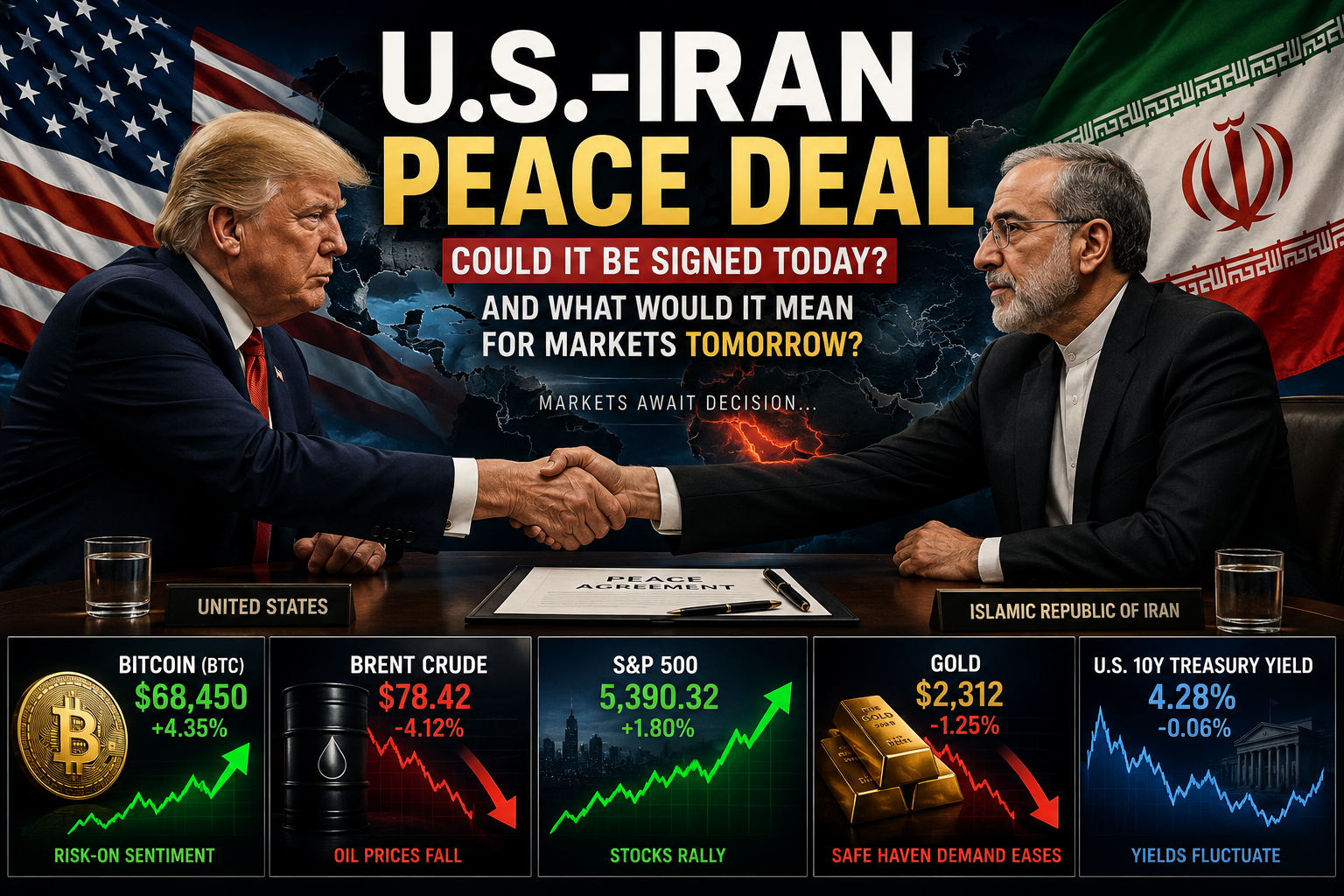
As of Sunday, June 14, 2026, the market is staring at one question: is the U.S.-Iran agreement actually getting signed today, or is this another diplomatic head fake?
President Trump says the deal is scheduled to be signed today and that the Strait of Hormuz would reopen immediately afterward. Iran, however, has pushed back on the timing, saying a signature today is not confirmed, though it has left the door open to a deal in the coming days. That gap matters. In markets, timing is not a detail; timing is the trade.
The Core of the Possible U.S.-Iran Agreement
From what has been reported, this is not yet a grand bargain. It looks more like a first-stage memorandum of understanding designed to freeze the conflict, extend the ceasefire for around 60 days, reopen the Strait of Hormuz, and create space for nuclear negotiations. Axios reported that the U.S., Iran, Pakistan and Qatar were expected to participate in a virtual signing process, while Reuters described the deal as focused on reopening Hormuz, lifting the U.S. naval blockade on Iranian ports, and pushing nuclear talks into a follow-up phase.
The key point, in my view, is this: markets do not need perfect peace to rally. They need the tail risk to collapse. If investors believe the Strait of Hormuz is reopening and the war premium is being removed from oil, the first reaction could be violent.
Will It Be Signed Today?
My base case: possible, but not guaranteed.
The U.S. side is signaling urgency. Pakistan is signaling progress. Qatar is actively involved. But Tehran is being careful, likely because any agreement has to be sold domestically as a victory, not a concession. That explains the mixed messaging: Washington wants a market-moving announcement; Tehran wants strategic ambiguity.
So the cleanest answer is:
If it is signed today, markets open tomorrow in risk-on mode. If it is delayed but still likely, markets may partially price the deal. If Iran rejects the timing outright, oil and safe-haven assets could bounce again.
Why Hormuz Is the Whole Macro Story
The Strait of Hormuz is not just a geopolitical headline. It is one of the most important arteries in the global economy. The U.S. Energy Information Administration says flows through Hormuz averaged about 20.9 million barrels per day in the first half of 2025, roughly 20% of global petroleum liquids consumption.
That is why this deal matters so much. Reopening Hormuz would not simply lower oil prices. It would reduce shipping insurance costs, ease LNG fears, cool inflation expectations, improve central bank flexibility, support risk assets, and weaken the stagflation narrative.
Market Impact If the Deal Is Signed
Oil and Energy
Oil would likely be the first asset to move. A signed agreement and credible reopening of Hormuz would probably trigger a sharp decline in the geopolitical risk premium. Brent and WTI could gap lower, especially if traders believe physical flows will normalize quickly.
Energy equities may react in two ways: integrated majors could fall with crude, while refiners, airlines, shipping companies, industrials and consumer-sensitive stocks may rally on lower input costs.
Stocks
Equities would likely rally, especially in the U.S. A peace deal would remove a major macro overhang: oil-driven inflation. Growth stocks, tech, cyclicals and small caps could benefit from lower yields and improving sentiment.
But I would not chase everything blindly. Defense stocks and oil producers could underperform. The best equity reaction would probably be in sectors hurt by high energy prices: airlines, transportation, chemicals, consumer discretionary and emerging-market importers.
Bonds
Treasuries could rally if markets see the deal as disinflationary. Lower oil means lower inflation expectations, which means lower pressure on the Fed. The front end of the yield curve could price in a more dovish path, while the 10-year could fall if growth fears fade without reigniting inflation.
That said, if equities explode higher and recession risk falls, the long end might not rally as much. This could become a classic “bullish risk, mixed duration” setup.
U.S. Dollar
The dollar reaction is tricky. In a pure risk-on move, the dollar may weaken as safe-haven demand fades. But if the U.S. is seen as the diplomatic winner and global capital flows back into U.S. assets, the dollar may stay supported.
My bias: weaker dollar versus high-beta currencies, mixed against the euro and yen.
Gold
Gold would likely fall at first. A peace agreement reduces geopolitical fear, lowers the need for crisis hedges, and could pull capital back into equities. But gold may not collapse if investors still doubt the durability of the deal or if central banks continue diversifying reserves.
Bitcoin
Bitcoin could benefit from risk-on liquidity. If oil falls, inflation fears ease, yields drop, and investors rotate back into speculative assets, BTC could rally. But Bitcoin is not just a geopolitical hedge; it is also a liquidity asset. The cleaner the disinflation story, the better the setup for crypto.
In my view, BTC’s strongest scenario is not “war panic.” It is peace plus lower yields plus renewed appetite for risk.
Commodities Beyond Oil
Industrial metals could rally if investors interpret peace as a boost to global growth. Copper, aluminum and other cyclical commodities may benefit from lower energy costs and better demand expectations.
Agricultural commodities may ease if fertilizer and shipping risks decline. LNG prices, especially in Europe and Asia, could also soften if Hormuz normalization looks credible.
The Bigger Macroeconomic Impact
The end of the war would matter because it attacks the most dangerous macro combination: high energy prices plus weak growth.
That combination is stagflationary. It forces central banks into a brutal tradeoff: fight inflation and hurt growth, or support growth and risk inflation expectations. Recent market commentary from the Fed noted that the Middle East conflict had been a key factor behind asset-price moves, including higher Treasury yields and inflation compensation.
A real peace deal would reverse part of that pressure. It could:
- Lower headline inflation.
- Reduce recession risk.
- Improve consumer confidence.
- Cut freight and insurance costs.
- Ease pressure on Europe and Asia.
- Support emerging markets.
- Give central banks more room to pause or cut.
That is why I see this as more than a Middle East story. It is a global liquidity story.
My Take
I would treat today’s signing headlines with caution, but not cynicism. The incentives for a deal are strong. The U.S. wants a diplomatic win. Iran wants sanctions relief, security guarantees and control over the narrative. Energy-importing countries desperately want Hormuz normalized.
But the market’s first move may be too emotional. If the deal is signed, I expect an immediate risk-on reaction: oil down, equities up, gold down, Bitcoin up, yields lower at the front end. Then investors will ask the harder question: is this a ceasefire extension, or the beginning of a real settlement?
That distinction will decide whether tomorrow’s rally becomes a durable macro regime shift or just another headline trade.
FAQs
Is the U.S.-Iran deal confirmed?
Not yet. Trump says it is scheduled to be signed today, but Iran has disputed the exact timing. The deal appears close, but not fully confirmed.
What is the most important part of the agreement?
The reopening of the Strait of Hormuz. That is the direct channel into oil, inflation, shipping, LNG, bonds, equities and global risk sentiment.
What happens to oil if the deal is signed?
Oil would likely fall as the geopolitical risk premium comes out of the market.
What happens to Bitcoin?
BTC could rally if the deal lowers inflation fears, reduces yields and improves risk appetite.
Is this peace deal bullish for markets?
In the short term, probably yes. In the long term, only if the agreement holds and leads to a credible nuclear and security framework.