
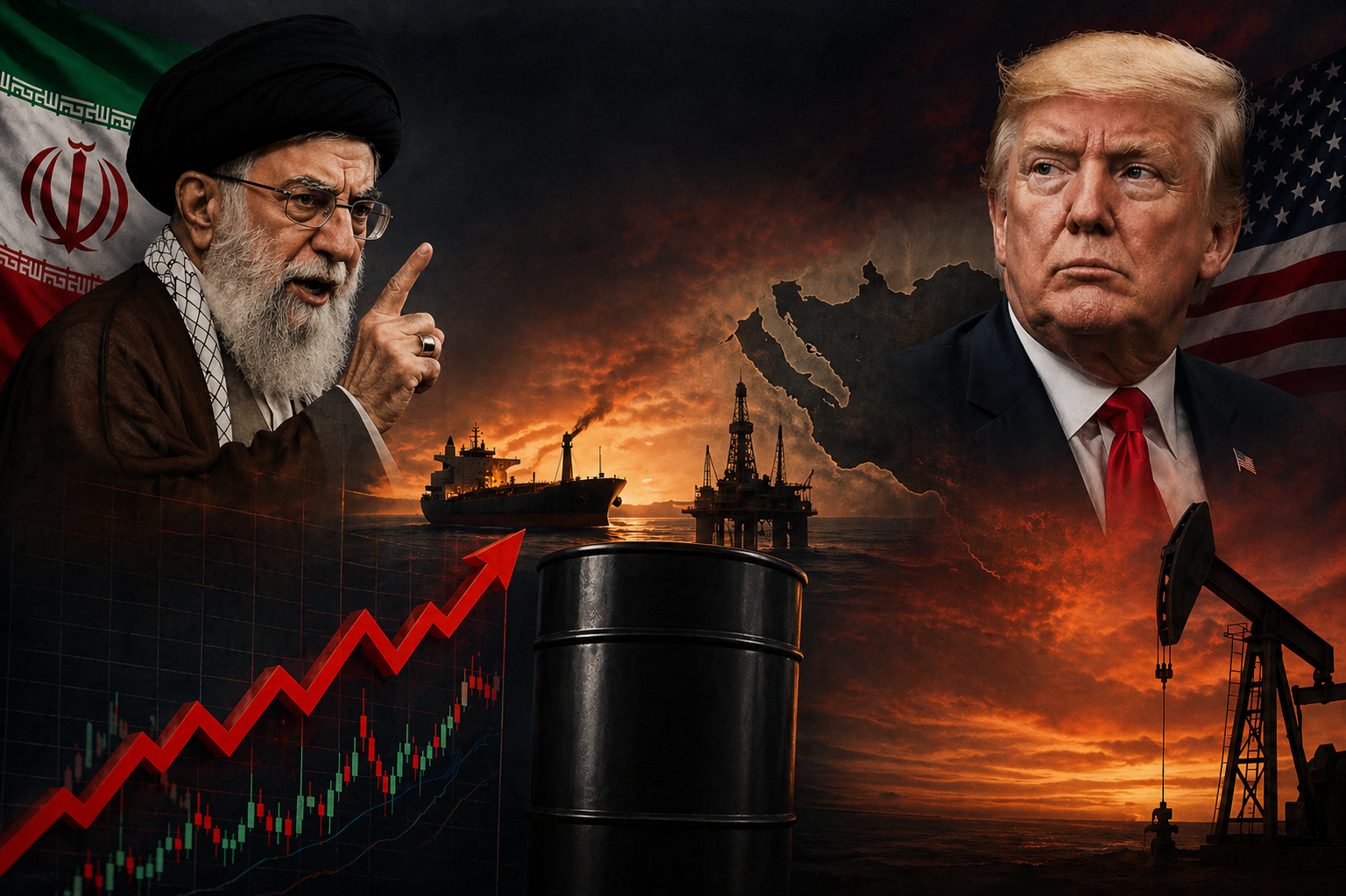
The moment tensions between Iran and the United States escalated again, global markets immediately understood this was not just another geopolitical headline. Oil surged. Bond yields reacted. Inflation fears returned. And suddenly, investors everywhere were forced to reconsider one critical question:
What happens to the global economy if energy markets spiral out of control again?
From my perspective, this is no longer simply a Middle East story.
It is a macroeconomic story capable of influencing:
- Inflation.
- Central bank policy.
- Global liquidity.
- Equities.
- Bonds.
- Commodities.
- And crypto markets simultaneously.
Because energy sits at the center of the modern global economy. And whenever energy markets destabilize, the financial system eventually feels the pressure.
Why the Strait of Hormuz Is One of the Most Important Locations in the World
The Strait of Hormuz is not just another shipping route. It is arguably the most important energy chokepoint on the planet. Roughly one-fifth of global oil consumption passes through this narrow corridor connecting the Persian Gulf to international markets. Massive volumes of:
- Crude oil.
- Refined products.
- And liquefied natural gas.
Flow through the region every single day.
That means even the possibility of:
- Military confrontation.
- Sanctions escalation.
- Naval restrictions.
- Or shipping disruptions.
Can instantly trigger fear across global energy markets.
Markets do not wait for full supply disruptions before reacting. They react to probabilities. And the moment investors begin believing there is a meaningful risk to energy flows, oil prices begin pricing a geopolitical premium almost immediately. This is exactly what happened as tensions between Iran and Donald Trump escalated.
The market understood that the situation could evolve into something far larger than a temporary diplomatic dispute.
How Geopolitical Tensions Spread Through Financial Markets
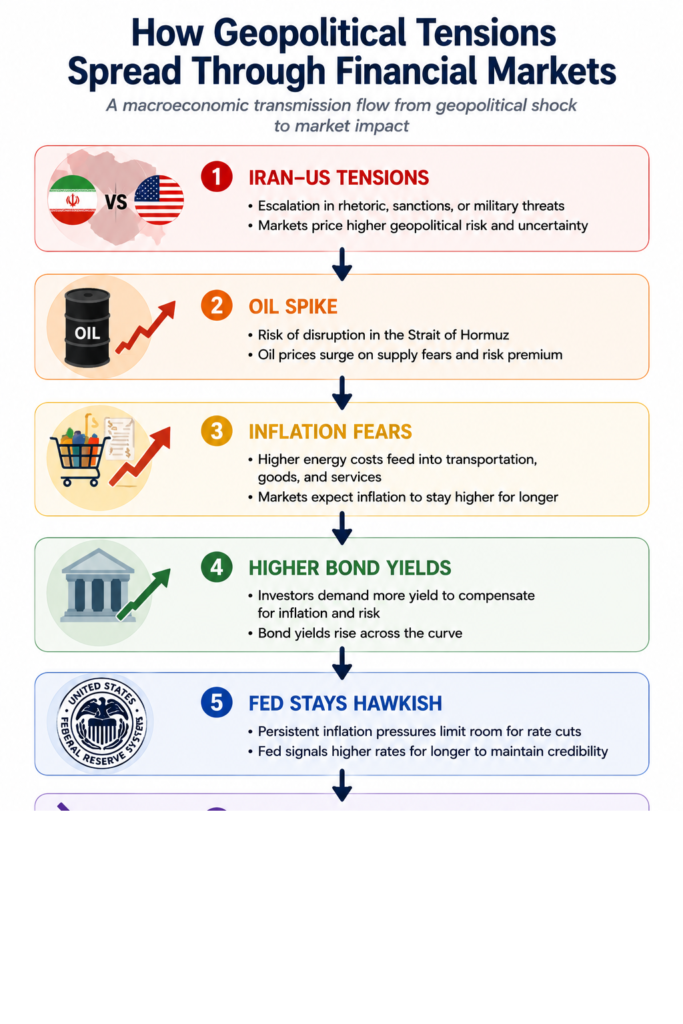
Geopolitical tensions can rapidly spread through oil markets, inflation expectations, bond yields and monetary policy creating volatility across nearly every major asset class.
Why Oil Markets React Before Wars Actually Begin
One of the most misunderstood aspects of financial markets is that oil prices rarely wait for wars to officially begin before moving. Energy markets are forward-looking systems.
They constantly attempt to anticipate:
- Future supply disruptions.
- Sanctions risk.
- Military escalation.
- Shipping instability.
- And geopolitical uncertainty.
This means headlines alone can move markets aggressively. From my perspective, that is why oil remains one of the purest “macro transmission assets” in the world. Because oil does not only reflect energy fundamentals.
It reflects:
- Fear.
- Geopolitics.
- Inflation expectations.
- And global liquidity conditions.
When tensions involving Iran intensify, markets immediately focus on:
- The Strait of Hormuz.
- Tanker security.
- Shipping insurance costs.
- Naval deployments.
- And potential retaliation scenarios.
Even if no actual disruption occurs immediately, the risk premium itself can drive prices sharply higher. And once oil rises aggressively, the effects spread everywhere else.
Why Inflation Becomes the Central Problem
This is where the story becomes far more important for financial markets. Higher oil prices do not stay isolated inside energy markets. They spread throughout the economy.
Oil influences:
- Transportation.
- Manufacturing.
- Food production.
- Logistics.
- Aviation.
- Chemicals.
- Electricity.
- And consumer expectations.
That is why energy shocks often become inflation shocks. And inflation shocks create problems for central banks. Markets had increasingly hoped inflation would continue cooling throughout 2026, allowing the Federal Reserve to eventually reduce interest rates. But geopolitical oil spikes complicate that scenario dramatically.
If:
- Gasoline prices rise.
- Shipping costs increase.
- And businesses face higher energy expenses.
Inflation expectations can rise again very quickly.
This is exactly what markets fear most. Not simply higher oil. But the possibility that central banks lose flexibility again.
Oil Prices vs Inflation Expectations
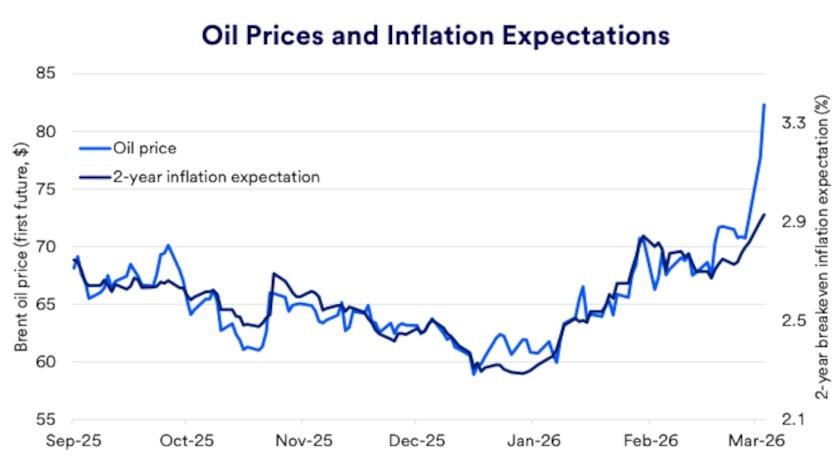
Historically, major oil spikes frequently feed into broader inflation expectations, increasing pressure on central banks and financial markets.
Why the Federal Reserve Could Become Trapped Again
From my perspective, the Federal Reserve now faces one of the most difficult macroeconomic environments possible. Because both sides of its mandate are becoming harder simultaneously.
On one side:
- Inflation risks remain elevated.
On the other:
- Economic growth is slowing.
And geopolitical energy shocks worsen both dynamics at the same time.
Higher oil prices:
- Increase inflation pressure.
- Weaken consumer purchasing power.
- Raise business costs.
- And tighten financial conditions.
That creates a dangerous policy environment.
If the Fed cuts rates too early:
- Inflation could accelerate again.
But if the Fed keeps policy restrictive for too long:
- Growth could deteriorate sharply.
This is what many macro investors describe as a policy trap. And markets dislike policy traps because they reduce clarity. Financial markets thrive on visibility.
When uncertainty rises around:
- Inflation.
- Interest rates.
- Energy.
- And growth.
Volatility usually increases across all major asset classes.
Why Bond Markets May Matter More Than Stocks Right Now
One of the clearest signs of macro stress often appears first in bond markets.
Bond yields react quickly whenever investors begin pricing:
- Higher inflation.
- Larger deficits.
- Tighter policy.
- Or reduced confidence in future rate cuts.
That matters enormously because bond yields influence the entire financial system.
Higher yields increase:
- Mortgage rates.
- Corporate refinancing costs.
- Government debt burdens.
- And valuation pressure on equities.
Technology stocks become especially sensitive because much of their valuation depends on future growth expectations discounted into today’s prices. And crypto markets also react strongly because liquidity conditions become tighter.
This is why geopolitical oil shocks frequently become bond-market events before equity markets fully react.
Why Higher Bond Yields Pressure Markets
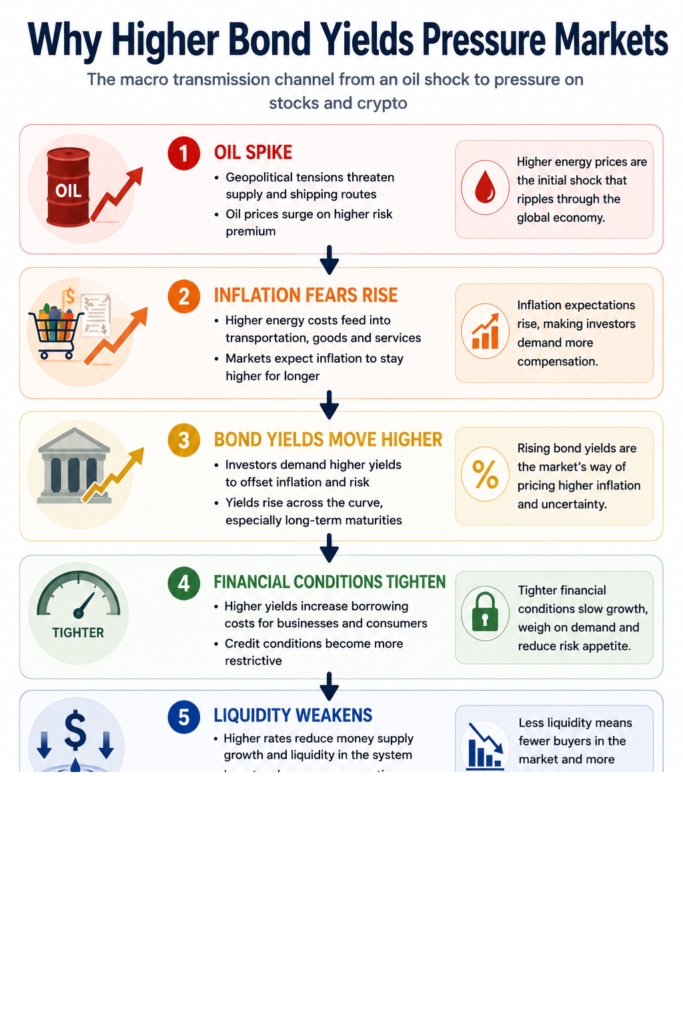
Bond markets often become the transmission mechanism through which oil shocks spread into broader financial markets.
Why Bitcoin and Crypto Are Caught Between Fear and Liquidity
One of the biggest misconceptions during geopolitical crises is that Bitcoin always behaves like digital gold. Sometimes it does not. From my perspective, Bitcoin increasingly trades as a global liquidity-sensitive asset.
That means: when liquidity conditions tighten, crypto markets often struggle.
During strong “risk-off” environments:
- Investors reduce leverage.
- Speculative positioning weakens.
- Capital moves toward safer assets.
- And volatility increases.
This can pressure:
- Bitcoin.
- Ethereum.
- Altcoins.
- And broader crypto sentiment.
But there is another side to this story. If geopolitical instability eventually damages growth enough to force central banks back toward future liquidity injections, crypto assets could recover extremely aggressively later in the cycle.
This is why Bitcoin currently sits between:
- Inflation fears.
- Liquidity expectations.
- Macro uncertainty.
- And monetary policy.
Crypto is no longer isolated from global macro conditions. It is deeply connected to them.
Why Markets Fear Uncertainty More Than Bad News
One of the most important realities in financial markets is that investors can often adapt to bad news. What markets truly struggle with is uncertainty.
Right now investors are trying to simultaneously price:
- Geopolitical escalation.
- Oil volatility.
- Inflation persistence.
- Fed policy uncertainty.
- Slowing growth.
- And liquidity risks.
That creates an environment where volatility can spread extremely quickly across:
- Commodities.
- Bonds.
- Equities.
- Currencies.
- And crypto.
And from my perspective, this is exactly why the Iran–Trump confrontation matters so much. Because this is no longer simply a geopolitical conflict. It is becoming a full macroeconomic transmission event.
What Investors Should Watch Next
Over the coming weeks, markets will likely focus on several key variables:
1. Brent crude prices
If oil continues rising aggressively, inflation fears could intensify rapidly.
2. Bond yields
Rising yields may signal markets expect tighter financial conditions ahead.
3. Federal Reserve communication
Any indication that rate cuts may be delayed could pressure risk assets.
4. Strait of Hormuz shipping activity
Markets will closely watch tanker flows and insurance costs.
5. Bitcoin and crypto liquidity
Crypto markets may become increasingly sensitive to macro headlines.
Final Thoughts
From my perspective, the biggest risk is not simply that oil prices rise temporarily.
The real risk is that geopolitical instability begins reshaping:
- Inflation expectations.
- Monetary policy.
- Bond markets.
- And global liquidity conditions simultaneously.
Because once that process starts, the impact spreads far beyond energy markets.
And that is exactly why investors around the world are suddenly pa
FAQs
Why does the Strait of Hormuz matter so much?
Because roughly 20% of global oil flows through it. Any disruption can significantly impact oil prices and inflation expectations.
Why do oil prices react before wars officially begin?
Markets price probabilities, not only confirmed events. Fear of future disruptions can push oil higher immediately.
How do higher oil prices affect inflation?
Energy costs influence transportation, manufacturing, logistics and consumer prices throughout the economy.
Why does the Federal Reserve care about oil shocks?
Because persistent oil inflation can make it harder for the Fed to cut interest rates safely.
Why do bond yields rise during inflation fears?
Investors demand higher compensation when inflation risks increase and policy uncertainty rises.
Why can crypto fall during geopolitical crises?
Because crypto increasingly depends on global liquidity conditions and investor risk appetite.
Could Bitcoin recover later even after volatility?
Yes. If economic weakness eventually forces central banks toward easier monetary policy, liquidity-sensitive assets like Bitcoin could rebound strongly.