

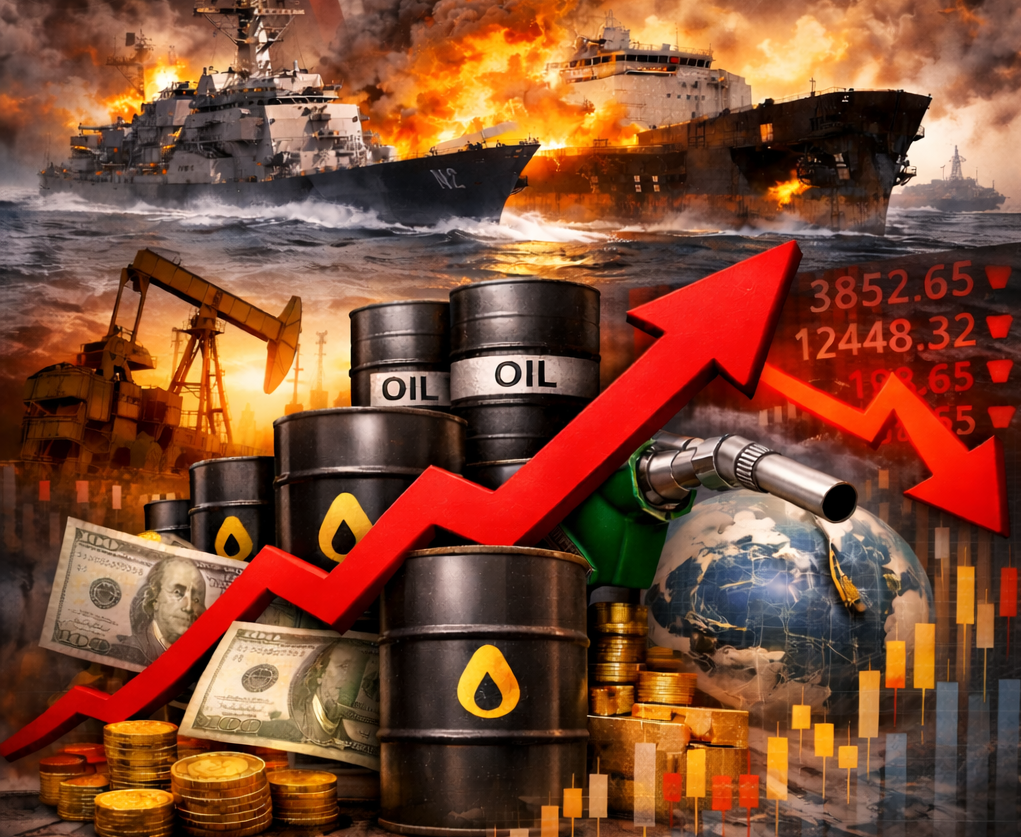
As of April 19, tensions between Donald Trump and Iran are now at a critical stage with immediate implications for global markets and the broader economic outlook. What makes this moment particularly relevant is that the situation is still unfolding, but its impact is already being felt across energy prices, financial markets, and macroeconomic expectations.
I think the 19th of April is the start of a possible chain reaction rather than the climax of the crisis. Markets are not panicking yet, but they are clearly adjusting to a new level of risk.
Initial Shock in the Strait of Hormuz
The U.S. forces in the Gulf intercepted an Iranian vessel as part of a broader strategy of naval blockade an escalation that Iran’s foreign minister said was “unacceptable”. The attack came just hours before a fragile truce was due to expire and the negotiations remain in doubt without a clear framework.
The problem is the Strait of Hormuz, one of the most strategic points of global energy logistics. This corridor carries 20% of the world’s oil supply, so even limited disruptions can have immediate consequences.
The impact is already visible, but still unfolding as of April 19. Oil prices have risen around 5% due to increased geopolitical risk, not a complete supply collapse. In other words, markets are pricing in uncertainty for a worst case scenario.
This early-stage reaction is typical of energy shocks. First prices move, then the physical disruptions and then the wider economic effects.”
Inflation Pressure Begins to Build
The rise in oil prices is starting to affect inflation expectations, particularly in the US. Gasoline prices have risen, creating added pressure on consumers and complicating the outlook for monetary policy.
That puts institutions like the Federal Reserve in a tough spot as it already struggles to thread the needle between reining in inflation and stalling the economy.
The inflationary impact now is more about expectations than actual data. But expectations are a big deal. If markets and consumers come to expect higher energy prices to stay high for a sustained period, those expectations can quickly become part of wage demands, pricing decisions and broader economic behavior.
Trump himself has acknowledged the direct link between the conflict and oil prices, suggesting that prices could fall quickly if tensions ease. That statement highlights how closely economic outcomes are now tied to geopolitical developments.
Early Signs of Disruption in Global Trade
While the situation has not yet spiraled into a full-blown disruption, the tension in Hormuz is already impacting the world’s trade routes. Shipping companies are starting to re-evaluate risk and insurance costs for shipping are rising.
These are early signs of a potential supply chain issue. At this point, the impact is limited but noticeable:
- Slight increases in logistics costs
- Initial rerouting of shipping flows
- Rising uncertainty in energy transportation
From a macro perspective, this is the beginning of what could become a broader trade inefficiency if tensions persist.
Financial Markets React Cautiously
The financial markets, are not in crisis mode but are clearly showing signs of caution. Oil prices are on the rise, and equity markets are volatile as investors re-evaluate risk exposure.
There is also a marked move to safer assets, though not yet at extreme levels. The implication is that investors are preparing for possible escalation, but are not pricing in a worst-case scenario.
One of the main issues at this stage is communication. Mixed signals from Washington on the negotiations are adding uncertainty, making it difficult for markets to form a clear expectation.
In my view, this is a typical market reaction for an early phase, not panic but repositioning.
Emerging Markets Begin to Feel Pressure
Emerging economies are starting to feel the effects of higher energy prices and global uncertainty even now. Countries that depend heavily on imported oil are especially vulnerable because higher costs put pressure on trade balances and currencies.
While it is too soon to talk about a full crisis, the initial signs are there:
- Increased vulnerability to capital outflows
- Pressure on exchange rates
- Rising costs of external financing
If the situation escalates, these pressures could intensify rapidly.
Possible Scenarios From April 19
At this point, the situation remains open, with several possible paths forward:
| Scenario | Developments | Economic Impact | Market Reaction |
|---|---|---|---|
| De-escalation | Diplomatic progress, reduced tension | Oil stabilizes, inflation pressure eases | Markets recover confidence |
| Sustained Tension (Base Case) | Ongoing uncertainty, partial disruption | Elevated energy prices, slower growth | Volatility continues |
| Escalation | Expanded military conflict | Severe supply shock, recession risk | Sharp market decline |
From my perspective, markets are leaning toward the second scenario uncertainty without full escalation.
Conclusion: The Beginning of a Critical Phase
April 19 should be viewed as the start, not the finish, of a potential macroeconomic shift. Energy markets and investor behaviour already show the initial shock, but the full impact will depend on how the situation develops in the days ahead.
What’s particularly significant about this moment is that it demonstrates how quickly geopolitics can impact the global economy. Oil prices, inflation expectations, trade flows and financial markets are all responding simultaneously, before the situation has fully played out.
If there’s anything that’s striking to me, it’s how sensitive the system has become. You don’t need a full-blown crisis any more, just the possibility of one, to move markets.